Showing posts with label Personal Development. Show all posts
Monday, 13 May 2013
Sunday, 12 May 2013
Forester Goes Hunting.
There's a line in Fundevogel:
"There was once a forester who went into the forest to hunt."
This one line is so ambiguous and open that it allows the visual development artist (in this case - me), to brainstorm scenario ideas. Below are some of the ideas I came up with.
But it was this design below...
which interested me the most. I liked the idea of the Forester having to sail for miles to find the ideal fishing/hunting spot, and camp for weeks, sort of like how real fisherman/hunters do. Then, just to add some mystery to it, I thought of the Forester taking a wrong turn and ending up in this valley of oddly constructed rock formations.
So I took that one further and spent a few hours rendering it. If you open in a New Tab you'll be able to see all the little details.
In this render I really tried to push the scale between the Forester and the Structures. I pictured this scene in my head almost over-whelming for the character, and I think the contract in scale helps illustrate this.
I also used a middle VP. This is in attempt to draw the eyes directly ahead of the Forester/through the rock, and emphasise the length of his journey and the size of this Forest.
"There was once a forester who went into the forest to hunt."
This one line is so ambiguous and open that it allows the visual development artist (in this case - me), to brainstorm scenario ideas. Below are some of the ideas I came up with.
![]() |
| The Forester surveys his forest barriers. |
| Valley Treck, Hut in the Trees, Running from Danger |
| Entrance to Grotto |
But it was this design below...
which interested me the most. I liked the idea of the Forester having to sail for miles to find the ideal fishing/hunting spot, and camp for weeks, sort of like how real fisherman/hunters do. Then, just to add some mystery to it, I thought of the Forester taking a wrong turn and ending up in this valley of oddly constructed rock formations.
So I took that one further and spent a few hours rendering it. If you open in a New Tab you'll be able to see all the little details.
In this render I really tried to push the scale between the Forester and the Structures. I pictured this scene in my head almost over-whelming for the character, and I think the contract in scale helps illustrate this.
I also used a middle VP. This is in attempt to draw the eyes directly ahead of the Forester/through the rock, and emphasise the length of his journey and the size of this Forest.
Dare to be Digital 2013.
So this year I'm part of one of the many groups who have applied to DARE to be Digital. I'm the team leader for our team, out late games, and I'm also lead 2D artist and will be doing 3D assets and animation if our application is successful.
I should say that I made this before my business cards. I figured I could take him for my card, seeing as I drew him 'n' all.
Anyway,
I thought I should dedicate a post to all the artwork I've created for the game, because it's very relevant to the personal development submission area.
The game is for iPad and is named "c a i r". It follows the story of a young kite-maker who lives high in the mountains of Rio de Janeiro. One day, following a natural disaster, the player must take a leap of faith on his (bird-shaped) kite down the side of the mountain - and the game begins. Using the iPad's accelerometer, you must guide the player down the mountain through the Favelas to safety. There's more to it than that, but I'll wait to see if we get in before talking too much about it.
The character design was inspired by games such as Bastion and Limbo. I love how the protagonists in those games are mysterious and ambiguous - yet memorable and appealing.
Visual Harmony was something I took from my honours project research and applied to this design also. The character lives in the mountains, amongst the clouds. So I took inspiration from clouds and the idea of a "peak" for his hair style. I really think it helps him connect with the game.
The Protagonist.

His Kite.
Old designs/style tests (Unused).
![]() |
| I came up with our team name and designed the logo. |
Anyway,
I thought I should dedicate a post to all the artwork I've created for the game, because it's very relevant to the personal development submission area.
The game is for iPad and is named "c a i r". It follows the story of a young kite-maker who lives high in the mountains of Rio de Janeiro. One day, following a natural disaster, the player must take a leap of faith on his (bird-shaped) kite down the side of the mountain - and the game begins. Using the iPad's accelerometer, you must guide the player down the mountain through the Favelas to safety. There's more to it than that, but I'll wait to see if we get in before talking too much about it.
I also made a rough splash screen for the game, which you can see here:
The character design was inspired by games such as Bastion and Limbo. I love how the protagonists in those games are mysterious and ambiguous - yet memorable and appealing.
Visual Harmony was something I took from my honours project research and applied to this design also. The character lives in the mountains, amongst the clouds. So I took inspiration from clouds and the idea of a "peak" for his hair style. I really think it helps him connect with the game.
The Protagonist.

His Kite.
Old designs/style tests (Unused).
![]() |
| These designs inspired the final character's hair. |
Exposition (Final Layout)
A while back I posted the image below in regards to my exposition presentation. I've updated the layout, and it's looking way more refined than before.
So the new plan has:
![]() |
| Old Plan |
So the new plan has:
-My Logo
-Character Sketches > Final Designs
- Silhouettes
-Fundevogel Story (Maybe)
-MY BOOK!
-Sketchbook (the brown thing)
- ONE clay statue. Polished. (As opposed to two average ones)
-Business Cards.
Earlier in the project, I expressed a desire to have the design process to be the exposition. So at the top you would have thumbnails and early sketches, then working down through final designs, environments, and then a clay model at the end.
However, I feel the book is going to do this task in a far more tangible and intimate way.
So for impact, I will now be having mainly finished pieces on the wall itself. Much like the front cover of the book is a final design, and then within lies the sketches; the wall will grab the attention of people with final designs, and then the book will show the process.
Golly, I really hope the book arrives in time.
I might have one of my environment paintings instead of the silhouette sheet, because that would probably look better in a big print. However, this is obviously just the plan. I'll probably mess around with it more when I get to actually put it up. As for wallpaper/background design. I'm quite a fan of just plain white backgrounds. And there's a reason for this.
Throughout the year I went and visited exhibitions to witness different ways in which people display their art. Although the ones I visited didn't directly relate to my project in any way, the idea of emphasis, clarity, and process are all factors important to my exhibition, and were apparent in the ones I visited.
The Rock Photography of Harry Papadopoulos an exhibition that is currently on at the McManus. The simplicity of this exhibition was something I really admired. All black and white photographs on a white background. The photographs really stood out against the white and demanded your attention. I really want the only focus of my wall to be the artwork. Originally, I had planned to have some form of wallpaper behind the art. But then I guess that was just an impulsive decision for novelty. I think my logo and name at the top should frame the exposition well enough. However, I might be tempted to put a subtle pattern around the edges of the wall to frame it even further.
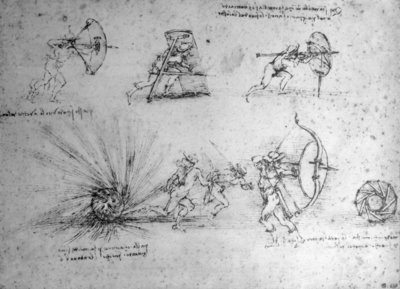
I also visited the Da Vinci exhibition months ago at the McManus, and thoroughly enjoyed it. (A favourite piece being the bow/shield).
I'm going to try and get some matte black frames for the character designs and some boards for the other paintings to give them a bit of authority. I think it's probably fair to say my presentation skills have grown a bit in the past 9 months.
Also here's the layout for my Book. It's 46 pages long. I think that should be a fine length. In my opinion, it clearly shows the development process for my characters, environments, and my personal development. So I hope the visitors get to experience that too.
Also, this was before I added any DARE art to it. Thus why there's only 40 pages long in this image.
![]() |
| New Plan! |
However, I feel the book is going to do this task in a far more tangible and intimate way.
So for impact, I will now be having mainly finished pieces on the wall itself. Much like the front cover of the book is a final design, and then within lies the sketches; the wall will grab the attention of people with final designs, and then the book will show the process.
Golly, I really hope the book arrives in time.
I might have one of my environment paintings instead of the silhouette sheet, because that would probably look better in a big print. However, this is obviously just the plan. I'll probably mess around with it more when I get to actually put it up. As for wallpaper/background design. I'm quite a fan of just plain white backgrounds. And there's a reason for this.
Throughout the year I went and visited exhibitions to witness different ways in which people display their art. Although the ones I visited didn't directly relate to my project in any way, the idea of emphasis, clarity, and process are all factors important to my exhibition, and were apparent in the ones I visited.
The Rock Photography of Harry Papadopoulos an exhibition that is currently on at the McManus. The simplicity of this exhibition was something I really admired. All black and white photographs on a white background. The photographs really stood out against the white and demanded your attention. I really want the only focus of my wall to be the artwork. Originally, I had planned to have some form of wallpaper behind the art. But then I guess that was just an impulsive decision for novelty. I think my logo and name at the top should frame the exposition well enough. However, I might be tempted to put a subtle pattern around the edges of the wall to frame it even further.
I also visited the Da Vinci exhibition months ago at the McManus, and thoroughly enjoyed it. (A favourite piece being the bow/shield).
I'm going to try and get some matte black frames for the character designs and some boards for the other paintings to give them a bit of authority. I think it's probably fair to say my presentation skills have grown a bit in the past 9 months.
Also here's the layout for my Book. It's 46 pages long. I think that should be a fine length. In my opinion, it clearly shows the development process for my characters, environments, and my personal development. So I hope the visitors get to experience that too.
![]() |
| It looks like Page 8 is blank, but it just hadn't finished buffering. That's where Fundevogel's final design is. |
Saturday, 11 May 2013
How I Paint over my Sketches.
In this visual development process it can often help to have a very distinct illustrative style. Illustrators and Visual Development artists often use their quick sketches as a base layer for their character and environment designs. This lends the designs a very organic feel, and when done well, can add charisma and appeal to a character design.
I know most people will know how to do this, but if anyone happens to be interested, then this might help out. And that would be awesome.
Steps:
1. Scan Sketch and open in Photoshop.
2. Change Sketch layer to "Multiply".
3. Create "New Layer" under Sketch, and paint on this.
4. to add whites (like the eyes here), just add a New Layer over the sketch layer.
You can merge all the layers after this step if you want to go on and create a clean render free of sketch lines. But for these early development sketches, I think leaving it at this stage gives it a much more appealing illustrative style.
Did anyone find this was useful or interesting? How do you paint over your sketches?
I quite enjoyed making this. I know it's insanely basic, but for my first "tutorial" I didn't want to do anything complex.
I know most people will know how to do this, but if anyone happens to be interested, then this might help out. And that would be awesome.
Steps:
1. Scan Sketch and open in Photoshop.
2. Change Sketch layer to "Multiply".
3. Create "New Layer" under Sketch, and paint on this.
You can merge all the layers after this step if you want to go on and create a clean render free of sketch lines. But for these early development sketches, I think leaving it at this stage gives it a much more appealing illustrative style.
Did anyone find this was useful or interesting? How do you paint over your sketches?
I quite enjoyed making this. I know it's insanely basic, but for my first "tutorial" I didn't want to do anything complex.
Revised Final Character Designs.
So I decided to return to my orignal design for Fundevogel's design. It worked so much better as a main character. The bright hair, the exaggerated proportions, the fact that he pretty much looks like a flame lantern. (Which actually makes it pretty cool that they escape from The Cook at night time.)
So here I thought I'd just do a rough line-up and compare to the original line-up I sketched in photoshop back in September. It's crazy to think how much I've learned since then. And it just feels like 10 minutes ago that I wrote my first blog post on this.
I also sent away for my book tonight (46 pages!), so I'm really excited for that to arrive. Should be a really unique addition to my exposition area.
![]() |
| Sketch Line-up "Fundevogel" - September 2012 |
![]() |
| Final Line-up "Fundevogel" - May 2013 |
![]() |
| Fundevogel | Digital |
Sunday, 5 May 2013
Fundevogel's Lagoon Take 2.
Should have uploaded this before now, but better late than never.
Basically, I went back and pushed the design of my original design for Fundevogel's lagoon (which can be seen here). Although to be honest, I never finished the painting. I always knew I could do more to it, but I just couldn't decide what, or how.
So, Ryan suggested thumb nailing designs on top of the original painting. I sort of kicked myself for not already trying that technique, as it seems like such an obvious thing to do.
One of the things that we decided should be more apparent in the scene is the indication of human presence, wether past or present.
Because the Lagoon is a very intimate and untouched place, besides the main character, I figured that the only indication should therefore be by Fundevogel's hand. So I added some footprints and a little make-shift pier, made out of a few small planks of wood by the water's edge.
(This actually lead on to the idea of having Fundevogel catching certain kinds of magic fish which can't be found anywhere else in the forest, and thus becomes the envy of the cook/etc. This would allow the adaptation unique animals which would cement the idea of the "Fundevogel world" as viewers would only see these species here - sort of like how Avatar creatures are now thought of) So I'm currently working on that, but back to the painting...
I also strived to the give the environment a sense of age. In Hercules, The Lord of the Rings, Brave, and countless films and adaptations this is a big part of environments appeal or mood, as it suggests a time BEFORE the story you're currently watching, and that just adds to the suspension of disbelief that you're actually watching a real living world in front of you.
In Hercules you can see the remnants of once towering statues spilled across the grounds of Philoctetes. This adds such a great atmosphere/mood to the scene when Hercules first goes there and it really drills the idea into the viewer that this guy has trained A LOT of different people over A LONG space of time.
The same points are also mentioned in the Art of Tangled in relation to the "Snuggly Duckling" pub.
Because the viewer can see that the building has been here so long that the tree has grown around it and though it, it instantly tells them that this place is OLD.
After deciding I couldn't make the pathway out of the lagoon work to any great effect, I therefore decided to just work with suggestions rather than details. In the finished painting below you can see that I've added some strange rock formations in the mid/background which slightly hint that a structure or building or something, has once been in this area, (but has long since fell apart). I think the contrast in size of Fundevogel's little pier and the large rock formations creates a great atmosphere, and certainly adds an interesting scale to the environment.
Saturday, 4 May 2013
Making a Book's worth of Art.
The layout for my book will be similar to the "Art of" books that accompany many of the feature films, animations, and games released today. By this I mean it will have a clear design process concerning the Fundevogel adaptation - (characters, environments, etc.)
However, because the book needs to cover all of the practice-based research I've undergone over the course of the project, the Fundevogel section will just be the "main" section, or chapter, of the book.
I'm still drafting up the layout of the book. However, I'll need to have the book ordered by the end of next week for it to arrive in time for the showcase, so that's the main urgency at the moment.
Here's some examples of illustrative styling tests I did for Fundevogel. In "The Art of Brave" the foliage/terrain section of the visual development really interested me. Basically the artists add a bit of charm or uniqueness to mundane designs such as a rock or a tree. The additions or alterations are usually small, but certainly plant the designs in the world of "Brave", and reminds the audience that they're not just in "any old woods", but rather, "the woods of BRAVE!"
I went and visited the McManus to do some snooping on the stone carvings they have there. Nothing like seeing the real thing to inspire the crap out of you.
![]() |
| This one's my favourite. Shame about the scrapes. |
This idea of connecting the environment visuals with the characters or the story (or both) harks back to the idea of visual harmony seen in films such as Tangled or Hercules, which again, despite being small details, exist to serve a certain visual style and support the story.
My Work:
Final Characters.
The colours are off on these because for some reason it won't let me upload tiff's. The only parts that needs refined on these are the costume designs. Which I'm still trying to pin down.
I also think I'm going to flip them so that it goes Thumbnails/Silhouettes > Final Design.
Subscribe to:
Comments (Atom)


.png)